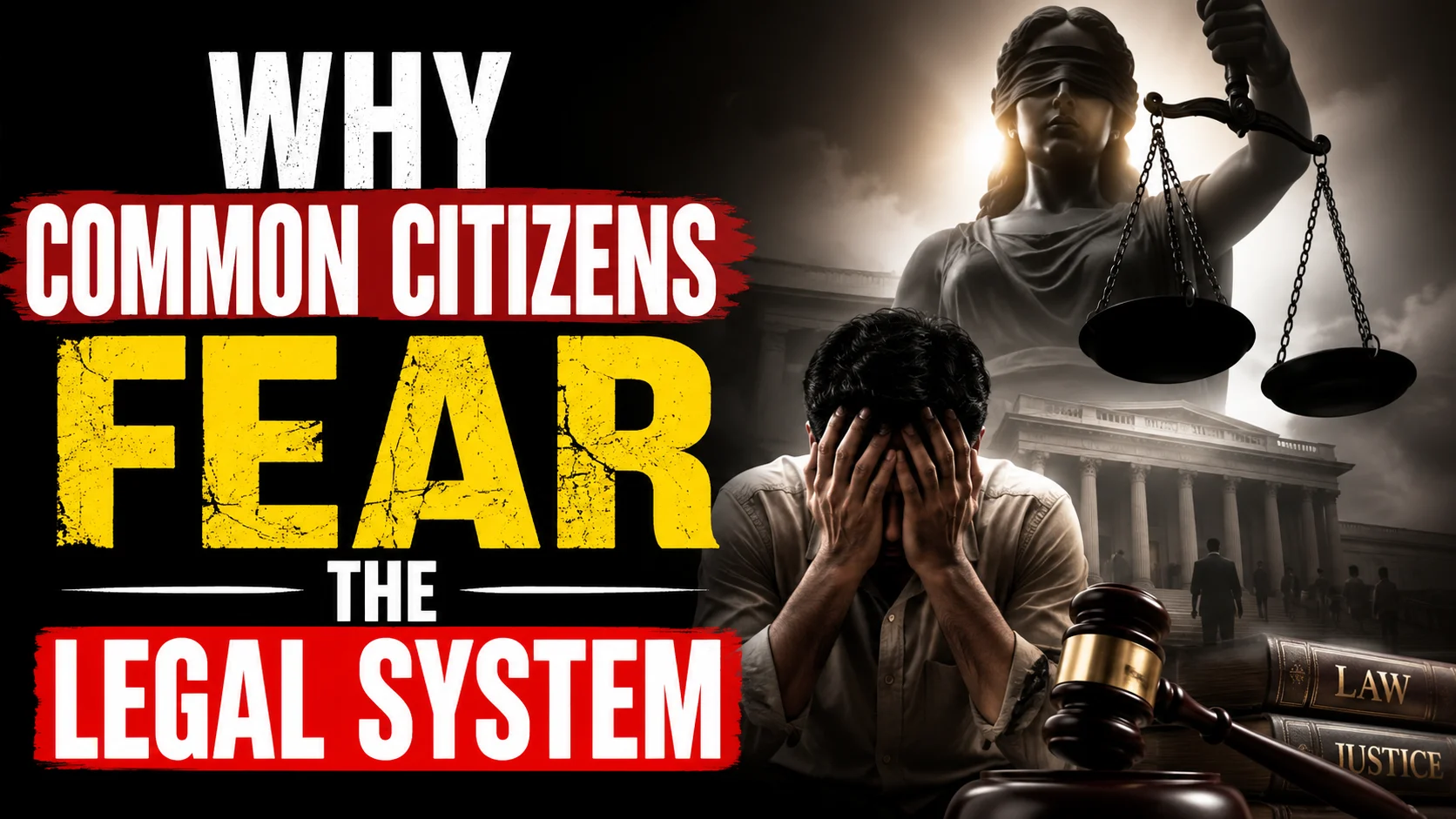
For the average Indian citizen, a court summons is often viewed with the same dread as a medical emergency. The fear is not necessarily of being found guilty, but of stepping into a labyrinth where time, money, and dignity are routinely stripped away. In a functioning democracy, the judiciary is supposed to be the ultimate shield for the vulnerable. Yet, across India, the legal system has inadvertently become a weapon of exhaustion, punishing the very people it was designed to protect.
This is not merely a legal crisis; it is a profound socio-economic issue. When justice is delayed by decades, it forces the poor into debt, paralyzes small businesses, and allows the powerful to operate with impunity. Understanding why citizens actively avoid the courts is crucial to recognizing the fault lines in India’s governance and institutional framework.
The Crushing Weight of 56 Million Pending Cases
The structural collapse of the Indian legal system is best understood through its numbers. As of recent data, over 5.6 crore (56 million) cases remain pending across the Supreme Court, High Courts, and district courts.
Behind these staggering figures is a severe infrastructural deficit:
- Judge-to-population ratio: India operates with roughly 21 judges per million people. The Law Commission recommended a minimum of 50 judges per million nearly four decades ago.
- Decade-long battles: The national average disposal time for a case is projected at nearly 9 years.
- Government litigation: The state itself is the largest litigant, accounting for nearly half of all pending cases, often clogging courts with inter-departmental disputes or appeals against citizens.
For an ordinary citizen, filing a civil suit for a property dispute or a breach of contract means committing to a battle that might outlive them.
The Undertrial Tragedy: Jails for the Poor, Bail for the Rich
Perhaps the most tragic reflection of the legal system’s failure is the state of Indian prisons. The foundational principle of criminal law—”bail is the rule, jail is an exception”—has been practically inverted.
Recent National Crime Records Bureau (NCRB) data reveals a harrowing reality: approximately 73% of inmates in Indian prisons are undertrials. These are legally innocent citizens awaiting the completion of their trial.
The systemic issues driving this include:
- Financial barriers: Courts frequently demand exorbitant financial sureties for bail, essentially locking up those who cannot afford to buy their freedom.
- Marginalized demographics: A disproportionate number of undertrials belong to marginalized communities—Dalits, Adivasis, and religious minorities—many of whom lack basic education and access to quality legal aid.
- Punitive detention: Thousands of undertrials end up spending more time in prison waiting for a verdict than they would have served if convicted.
The Weaponization of the Process
Fear of the legal system begins long before a citizen reaches a judge; it starts at the local police station. The power asymmetry between an ordinary citizen and law enforcement creates an environment ripe for extortion and harassment.
First Information Reports (FIRs) and legal notices are routinely weaponized. Because the system is notoriously slow, filing a false or exaggerated criminal complaint is a highly effective way to harass a rival, extort money, or settle personal scores. The accused is immediately burdened with the cost of securing anticipatory bail, hiring lawyers, and attending endless hearings. The famous cinematic trope of tareekh pe tareekh (date after date) is not fiction; it is the exhausting reality of the lower judiciary.
The Financial Ruin of Litigation
Seeking justice in India is prohibitively expensive. It is a war of attrition where the side with deeper pockets invariably holds the upper hand.
- Hidden costs: Beyond official court fees, citizens must bear the unpredictable costs of lawyer fees per appearance, travel to distant courts, and lost daily wages.
- Corporate advantage: Large corporations and affluent individuals exploit the system’s sluggishness, dragging out cases to force financially weaker opponents into unfavorable settlements.
Reforms and the Road Ahead
Fixing this institutional paralysis requires more than cosmetic changes. Serious, structural reforms must be prioritized:
- Massive Judicial Expansion: Doubling the sanctioned strength of judges and filling the persistent 33% vacancy rate in High Courts.
- Overhauling Bail Jurisprudence: Implementing a system where bail does not rely on financial wealth, ensuring poor undertrials are not penalized for their poverty.
- Technological Integration: Utilizing data-driven tracking, AI for case management, and e-courts to streamline filings and reduce procedural delays.
- Holding the State Accountable: Imposing heavy penalties on government departments that file frivolous appeals or delay proceedings.
Conclusion
A nation cannot claim to be entirely free if its citizens are terrified of the institutions designed to protect their rights. India’s judiciary is globally respected for its landmark constitutional judgments, but for the common citizen navigating the district courts, the Constitution feels entirely out of reach. Until the legal system shifts its focus from merely managing procedures to actively delivering timely justice, ordinary Indians will continue to suffer in silence, knowing that fighting for the truth might cost them everything.
Debating the Supreme Court’s Summer Recess Amidst 5.6 Crore Pending Cases
This short discussion sheds light on the sheer volume of pending cases in the Indian judicial system and explores the ongoing debate surrounding court working hours and judicial backlog.
Also Read The Business of Elections: How Campaign Money Controls Democracy