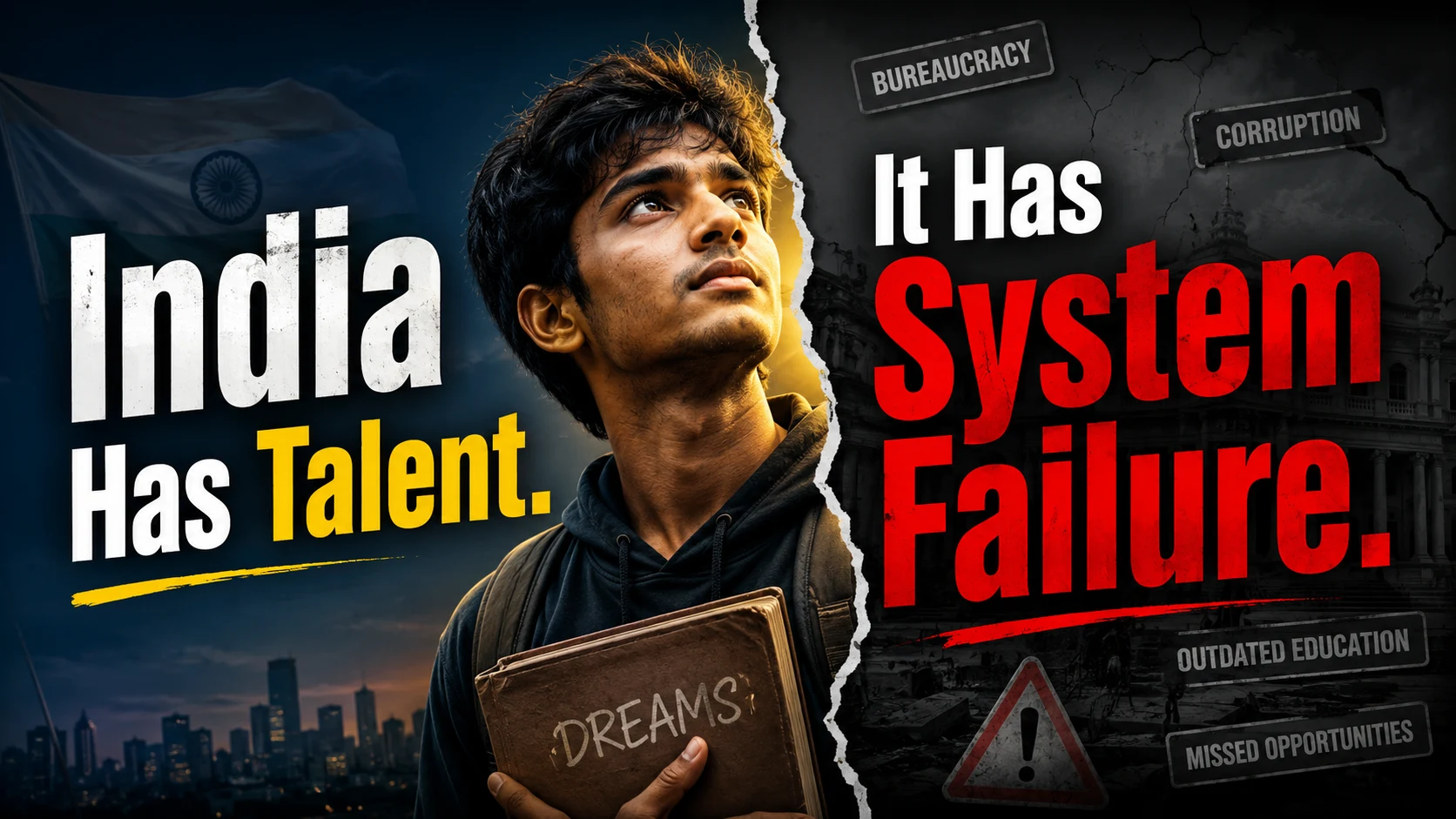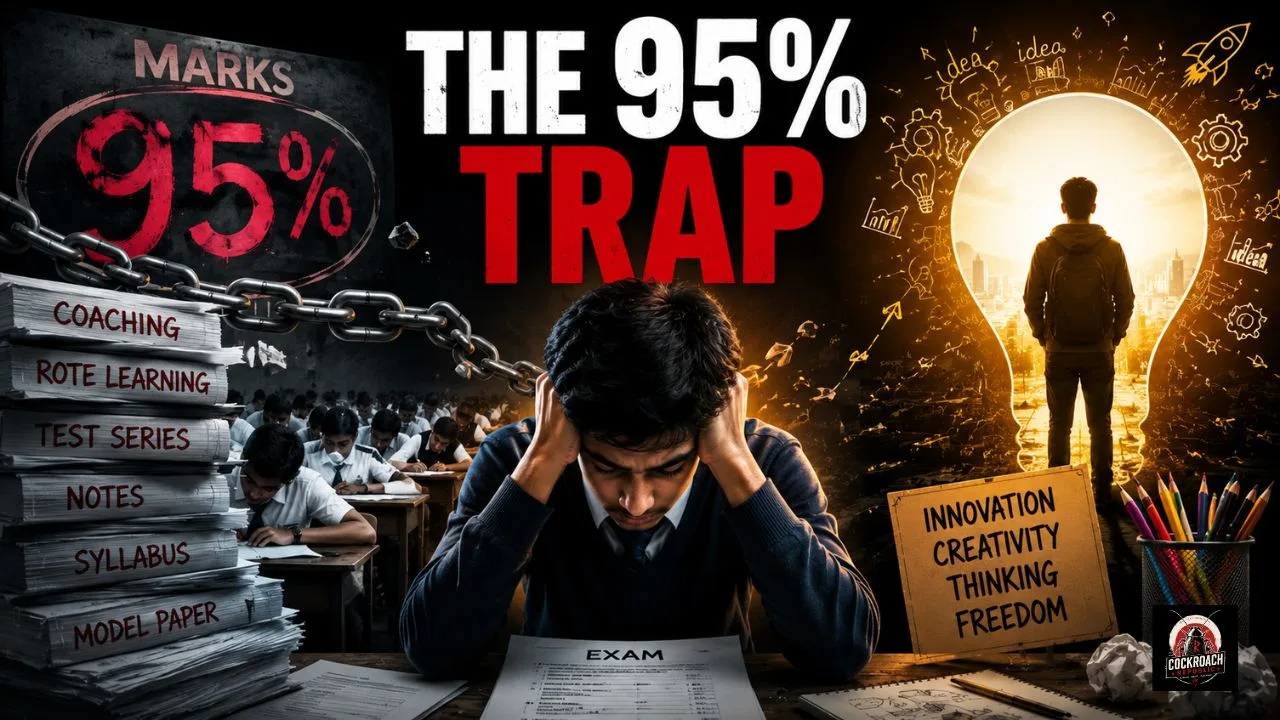
Every summer, Indian newspapers are plastered with the beaming faces of students scoring upwards of 95% in their board examinations. Yet, stepping from the classroom into the corporate world, a starkly different reality unfolds. India is minting millions of top-scoring graduates who possess encyclopedic memories but struggle with basic critical thinking, creating a structural paradox that threatens the country’s global innovation ambitions.
The issue is systemic: an educational framework heavily reliant on rote learning—memorization without conceptual understanding. While this approach has historically produced disciplined workers, it is failing to equip the next generation with the creativity and problem-solving skills required for a rapidly evolving global economy.
The Cognitive Cost of Mechanical Memory
Decades of cognitive science confirm that learning requires meaningful engagement to build flexible neural pathways. Rote memorization, however, stores information primarily in short-term memory. It functions much like early artificial intelligence: students are trained in pattern recognition to identify a problem and recall a known solution, entirely bypassing causative insight.
As the adage goes, “Memory without understanding is brittle. Understanding without memory is shallow.” Real learning requires both, but the Indian system disproportionately rewards the former. By treating textbooks as sacred texts and framing curiosity-driven questions as a “distraction,” the system inadvertently creates rigid, single-path thinkers.
This environment aggressively diminishes what Anurag Mehra of IIT Bombay identifies as the “Three C’s” of innovation:
- Competence: Conceptual knowledge is bypassed for memorized, brittle data.
- Curiosity: Authoritarian classroom dynamics often punish questioning, viewing it as defiance.
- Creativity: The reliance on rigid “model answers” enforces conformity, leaving no room for original thought.
High Scores, Hollow Skills: The Data Disconnect
The facade of academic excellence crumbles when tested against foundational metrics. The Annual Status of Education Report (ASER) 2023 exposes a severe learning crisis hiding behind inflated grades.
- Reading Deficits: While over 73% of Class V students can read basic text, 26.5% still cannot comprehend Class 2-level text in their regional language.
- Math Struggles: More than 56.7% of students lack the ability to solve a basic 3-digit by 1-digit division problem.
- Language Gaps: Among the 14–18 age group, 42.7% cannot read simple English sentences, and 26.5% fail to understand the meaning of what they do read.
Despite these foundational gaps, nearly 80% of classroom time is dedicated to exam preparation rather than skill-building or creative exploration. The result is an illusory perfection driven by grade moderation, where marks no longer equate to actual learning.
ALSO READ How India’s Coaching Industry Turned Millions of Dreams Into a ₹1 Lakh Crore Business
The Employer Reality Check
The consequence of this educational model is an escalating employability crisis. According to the Mercer-Mettl 2025 report, overall graduate employability in India stands at a mere 42.6%, a decline from previous years. Even in highly sought-after fields like AI and Machine Learning, employability hovers at just 46%.
Employers consistently point to a massive deficit in soft skills and higher-order thinking:
- Creativity: 44.3% (the weakest non-technical skill)
- Critical Thinking: 54.6%
- Communication: 55.1%
As one industry executive plainly stated: “Companies aren’t rejecting candidates because jobs don’t exist. They’re rejecting them because skills don’t match. We teach students to memorize answers; the world needs problem solvers.”
India’s Innovation Paradox: Quantity Over Quality
On paper, India’s innovation metrics look promising. The country climbed to 38th in the 2025 Global Innovation Index (GII) and ranks as the 6th-largest patent filer globally, with over 143,000 filings in 2025-26.
However, a deeper look reveals a discrepancy between volume and value. Research and Development (R&D) spending remains stagnant at just 0.64% of GDP—well below the global average. Furthermore, the private sector contributes only 36–41% of total R&D, compared to 70%+ in innovation hubs like China, South Korea, and the US.
Much of India’s patent boom is driven by a handful of private universities with distorted incentives, prioritizing the quantity of filings over genuine technological breakthroughs. It suggests an innovation landscape driven by policy mandates and institutional quotas rather than a thriving, organic ecosystem of creative minds. As one IIT graduate researching at MIT noted, “My ability to ace exams back in IIT was in no way correlated with being creative in scientific research.”
ALSO READ The Great Indian Education Paradox: Why Millions of Hard-Working Students Remain Unemployed
The Structural Reality and A Balanced View
To be fair, rote learning is not entirely without merit. It builds a necessary foundational memory bank and instills a high degree of discipline. India’s ability to produce highly structured, hard-working engineers and doctors for the global workforce is a testament to this rigor. However, structure without curiosity inevitably leads to conformity.
Transitioning away from this model is complicated by severe institutional hurdles. India faces a shortage of over one million teachers, with 90,000 schools operating with just a single educator. Crumbling infrastructure and high student-teacher ratios make mass, rote-based pedagogy the only logistically feasible option in many districts. Furthermore, poorly constructed multiple-choice questions (MCQs) and the commercialization of education through “solution manuals” actively incentivize shortcuts over deep engagement.
The Path Forward
Countries that consistently top global education and innovation rankings—such as Finland, Singapore, and surprisingly, South Korea, which successfully reformed its own notorious rote-learning culture—prioritize project-based assessments, open-ended inquiry, and interdisciplinary learning.
For India, the National Education Policy (NEP) 2020 outlines a promising shift toward competency-based learning and reduced syllabus loads, but implementation remains sluggish. Genuine reform requires:
- Overhauling Examinations: Shifting from memory tests to application, analysis, and scenario-based assessments.
- Empowering Teachers: Investing heavily in professional development focused on inquiry-based practices, and fixing the dire teacher-to-student ratios.
- Holistic Evaluation: Using portfolios, projects, and practical problem-solving as primary metrics for intelligence, rather than a single high-stakes paper.
Ultimately, India must recognize that an education system that hasn’t fundamentally evolved in decades cannot power the economy of tomorrow. Examinations assess memory, but life is about imagination. Until classrooms reward the student who asks the difficult question as much as the one who memorizes the perfect answer, India’s true innovative potential will remain locked behind a wall of high scores and hollow skills.