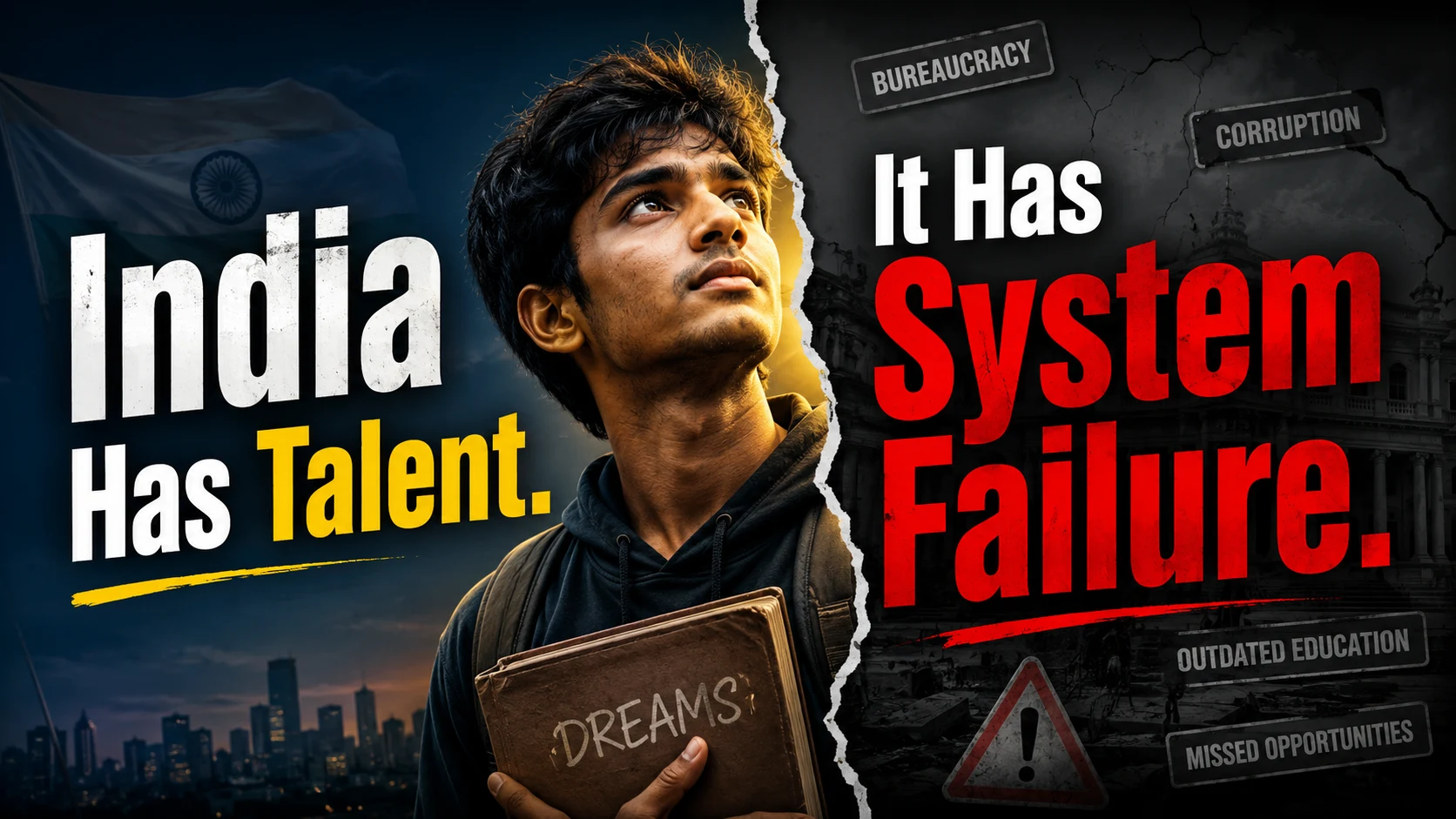
Walk into the executive boardrooms of Silicon Valley, and Indian talent commands the room. Yet, walk into a crowded employment exchange in Uttar Pradesh or speak to a frustrated startup founder in Bengaluru, and a starkly different reality emerges. India does not suffer from a deficit of human capital; it suffers from a profound, structural, and institutional system failure.
For ordinary citizens, this disconnect is not merely an academic debate—it is the difference between generational prosperity and a lifetime of economic stagnation. As India stands at the peak of its demographic dividend, with over 600 million people under the age of 25, the stakes have never been higher. If harnessed, this workforce could drive global growth for decades. If squandered, it threatens to trigger unprecedented social unrest.
To understand why a nation capable of landing a rover on the moon’s south pole struggles to conduct leak-proof medical entrance exams, we must look beyond political rhetoric and examine the deep-rooted institutional decay choking India’s potential.
The Education-to-Employability Chasm
The root of the systemic failure begins in the classroom. India produces millions of graduates annually, yet industry leaders consistently sound the alarm on a massive skills deficit. Multiple iterations of the India Skills Report have historically indicated that roughly half of the country’s graduates are fundamentally unemployable for the jobs they apply for.
This paradox is driven by several institutional failures:
- Degree Inflation over Skill Acquisition: The proliferation of poorly regulated engineering and management colleges has created a surplus of degrees with little underlying competence.
- The “Exam-Coaching” Industrial Complex: A broken assessment system forces millions of brilliant young minds to spend years memorizing patterns for hyper-competitive exams (like UPSC, JEE, and NEET) rather than engaging in creative problem-solving or research.
- Systemic Compromise: Frequent instances of paper leaks and examination delays erode trust in meritocracy, devastating the morale of the youth.
When the education system optimizes for test-taking rather than capability, the economy inherits a workforce ill-equipped for a rapidly digitizing global market.
Jobless Growth and the Manufacturing Void
Even for those who do possess the right skills, the system often fails to provide sufficient opportunities. India has celebrated impressive GDP growth figures, frequently outpacing other major economies. However, economists warn of a persistent trend of “jobless growth.”
The structural flaw lies in the economic transition. A healthy developing economy moves workers from agriculture to manufacturing, and then to services. India largely bypassed the manufacturing boom, leaping straight into IT and services.
While the services sector generates massive wealth, it is not labor-intensive enough to absorb the millions joining the workforce every month. Despite ambitious state-backed initiatives to boost domestic manufacturing, systemic hurdles remain:
- Regulatory Cholesterol: Navigating land acquisition, labor laws, and environmental clearances remains a labyrinthine process.
- Infrastructure Deficits: While highway construction has accelerated, the underlying logistics costs in India remain higher than in competing manufacturing hubs like Vietnam or Bangladesh.
- Policy Inconsistency: Sudden changes in export-import duties and tax regulations spook long-term industrial investors.
The Bureaucratic Chokehold on Innovation
When systems fail to provide jobs, talent historically turns to entrepreneurship. India boasts the world’s third-largest startup ecosystem, a testament to its raw entrepreneurial grit. Yet, this success exists in spite of the system, not because of it.
Entrepreneurs frequently cite “tax terrorism,” arbitrary regulatory notices, and grueling compliance burdens as primary obstacles. The ease of doing business on paper often conflicts with the friction of doing business on the ground.
This bureaucratic friction has directly fueled The Great Indian Brain Drain 2.0. Historically, India exported its top engineers and doctors. Today, it is exporting its wealth creators. Thousands of high-net-worth individuals (HNIs) and startup founders are relocating their bases to jurisdictions like Singapore, Dubai, and Delaware. They are not fleeing competition; they are fleeing a system that views wealth creation with suspicion and penalizes compliance with endless red tape.
Islands of Excellence Prove the Point
The most damning evidence of India’s systemic failure is its own isolated successes. Look at the Unified Payments Interface (UPI) or the Indian Space Research Organisation (ISRO).
When Indian talent is placed within a well-designed, mission-driven institution that is insulated from bureaucratic meddling and political interference, it produces world-beating results. UPI digitized a billion-person economy in half a decade. ISRO executes complex interplanetary missions at a fraction of NASA’s budget.
These triumphs prove that the Indian mind is highly capable. The failure lies in the inability to replicate these insulated, high-functioning systems across public schooling, municipal governance, healthcare, and the judiciary.
The Path Forward: Fixing the Machine
India’s current trajectory is unsustainable. To convert its demographic bulge into a true dividend, deep structural reforms are non-negotiable:
- Decriminalize Business: Shift the regulatory framework from suspicion to facilitation. Compliance must be digitized, simplified, and predictable to stop the exodus of capital and innovators.
- Overhaul Public Examinations: Establish autonomous, heavily audited bodies utilizing advanced encryption and localized delivery mechanisms to restore faith in national exams.
- R&D Investment: India spends roughly 0.65% to 0.7% of its GDP on research and development—a fraction of what the US, China, or South Korea spends. Government and corporate India must mandate higher R&D allocations to move up the global value chain.
- Judicial and Police Reform: A modern economy cannot function on a sluggish judiciary where contract enforcement takes years.
Conclusion
India’s greatest asset is its people, but human capital without institutional support is like a hyper-car stuck in endless traffic. The ongoing struggles with youth unemployment, educational credibility, and the exodus of entrepreneurs are not natural disasters; they are the symptoms of a rusted bureaucratic machine.
To claim its promised place in the 21st century, India must shift its focus from celebrating its raw potential to urgently fixing the plumbing of its state machinery.
India’s greatest challenge is no longer proving to the world that it has talent; it is building a system back home that is finally worthy of it.
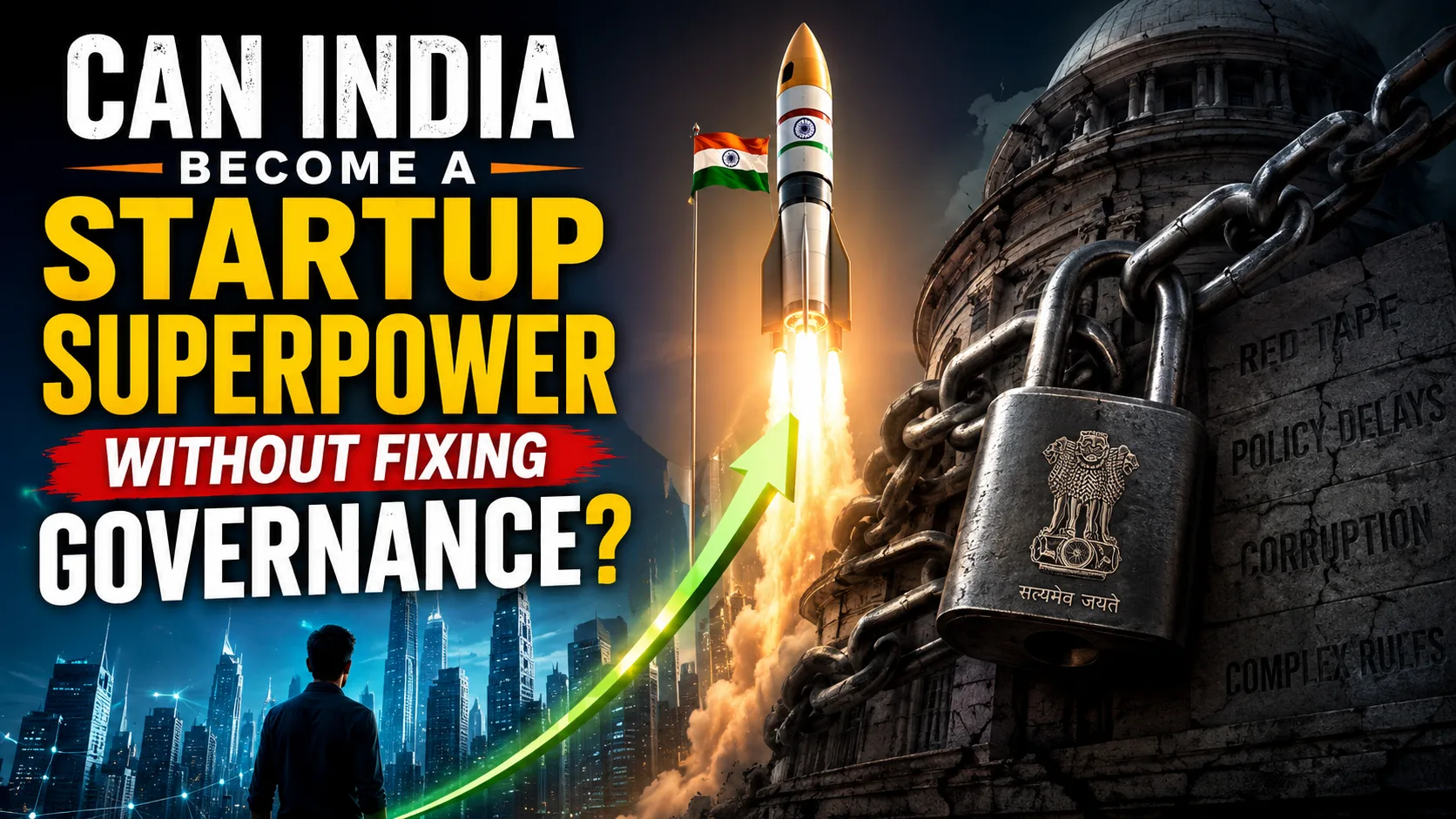
Also Read Can India Become a Startup Superpower Without Fixing Governance?