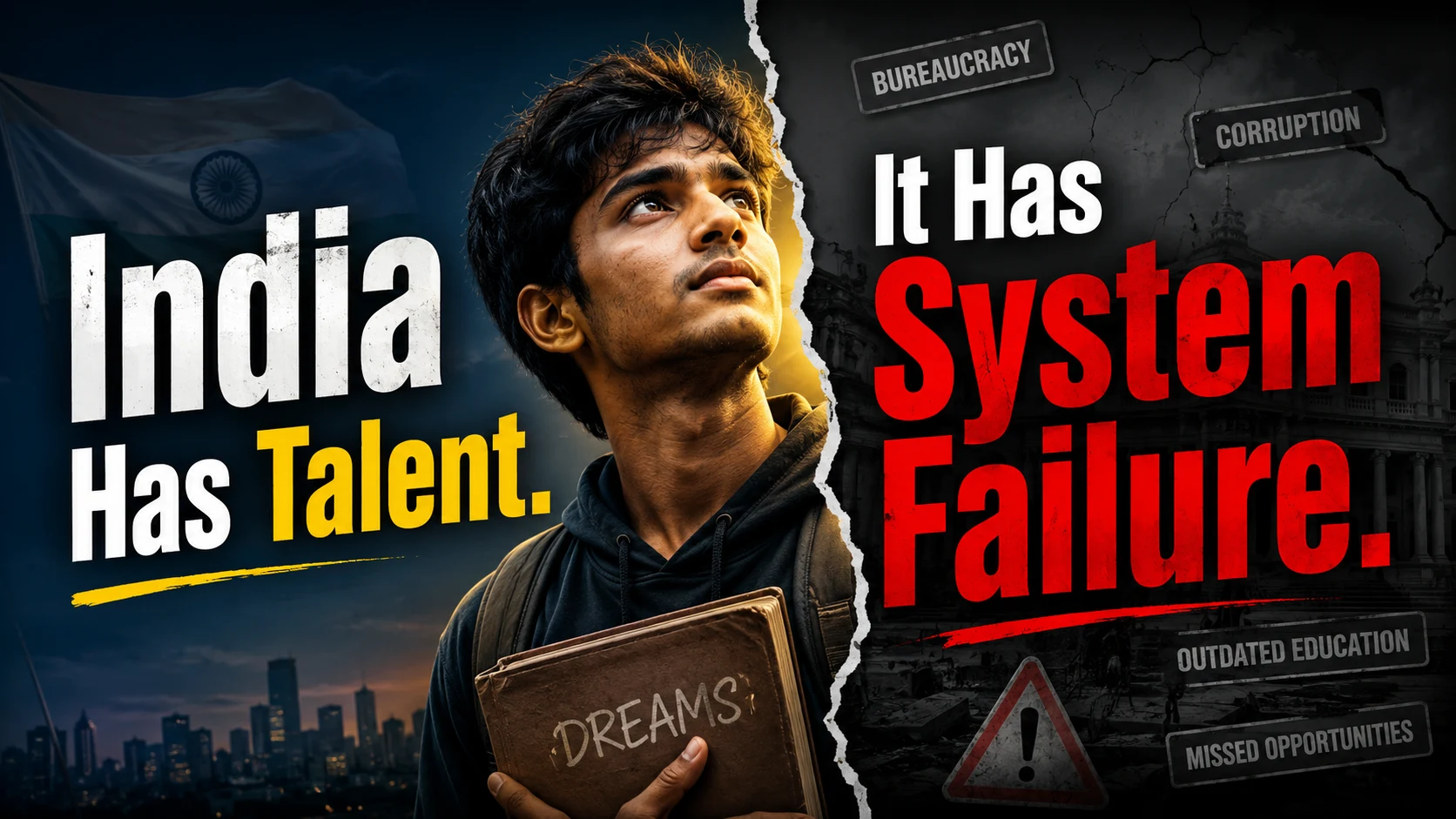
For decades, the Indian middle-class dream was built on a simple, unwritten contract: study hard, play by the rules, clear the exams, and secure a stable future. Today, for India’s Generation Z, that contract has been fundamentally shattered. From chronic exam paper leaks to jobless economic growth, young Indians are realizing that the institutions designed to protect and enable their futures are increasingly failing them.
This is not merely a crisis of youth angst; it is a profound national emergency. India’s much-touted “demographic dividend”—a historically unique window where the working-age population outweighs dependents—is at risk of becoming a demographic time bomb. When the youth lose faith in the systemic plumbing of a country, the consequences echo through family savings, economic productivity, and ultimately, national stability.
The Graduate Trap: Education Without Employment

The traditional Indian approach to upward mobility relies heavily on obtaining university degrees. However, recent data highlights a severe structural mismatch between what Indian educational institutions produce and what the modern labor market demands.
The statistics paint a grim picture of a “graduate trap.” Among Gen Z graduates, the unemployment rate has reached an alarming 29% for males and nearly 37% for females.
- The Skills Deficit: Educational institutions are churning out graduates without industry-relevant or practical skills.
- The Gender Divide: Urban Gen Z women face an overall unemployment rate of 22.6%, heavily burdened by household responsibilities, unsafe public transport, and a lack of flexible workplace policies.
- Underutilization: Higher education no longer acts as a shield against poverty or unemployment. Instead, many highly educated youths are forced into informal labor or sit idle, preparing endlessly for government jobs that barely exist.
The Collapse of Meritocracy: When the System is Rigged
If education is the vehicle for mobility, standardized examinations are the engine. But what happens when the engine is compromised?
The systemic failures of the National Testing Agency (NTA) over the past few years have become the clearest symbol of institutional decay. The controversies surrounding the National Eligibility cum Entrance Test (NEET-UG)—India’s high-stakes gateway to medical education—have devastated public trust.
In 2026, the NEET-UG exam, taken by over 2.27 million aspirants, had to be abruptly cancelled after investigations revealed widespread circulation of a leaked paper. This mirrored the equally disastrous 2024 NEET controversy.
The impact of these leaks goes far beyond delayed academic years. It represents a devastating breach of trust for families who pour their life savings into coaching centers. When an exam is rigged, the core tenet of a democratic republic—meritocracy—is dismantled. It sends a chilling message to the youth: hard work cannot compete with deep pockets and systemic corruption. The resulting psychological toll has been immense, with extreme anxiety and tragic reports of student suicides tied to examination cancellations and institutional apathy.
The Illusion of the Gig Economy
With formal corporate roles scarce and government exams compromised, millions of young Indians have turned to the informal sector and the gig economy. But this transition offers a mere illusion of security.
The expansion of contract work, gig roles, and temporary employment has heavily skewed employment statistics, masking the deep vulnerability of the Gen Z workforce.
- No Safety Net: Only 20.1% of working Gen Z individuals receive any form of social security.
- Lack of Formal Contracts: A staggering minority—just 14.1%—have formal employment contracts, leaving the vast majority exposed to sudden termination and wage theft.
- Unpaid Labor: A significant portion of young workers are absorbed into non-salaried roles, with over 15% of males and nearly 11% of females working as unpaid family laborers.
This precarious economic reality prevents young Indians from making long-term life decisions—such as buying homes, starting families, or investing in the broader economy.
A Growing Political and Institutional Trust Deficit
The convergence of rampant unemployment and institutional inefficiency is inevitably spilling over into civic and political disillusionment. Data from the Centre for the Study of Developing Societies (CSDS) highlights a shifting tide in public perception.
In pre-election surveys, unemployment and inflation (price rise) consistently rank as the primary drivers of dissatisfaction among the electorate, each cited by 24% of respondents as the most disliked aspect of governance. The trust deficit is not isolated to one political party; state governments across the ideological spectrum have failed to prevent exam leaks or generate sufficient formal employment.
When state capacity is viewed as inherently compromised, youth civic engagement turns into cynicism. The recent waves of student protests following examination leaks are not isolated incidents—they are symptoms of a generation demanding accountability from a bureaucracy that routinely shields itself from consequences.
The Road Ahead: Defusing the Time Bomb
India cannot afford to alienate its most valuable asset. Addressing the Gen Z crisis requires moving beyond political rhetoric and implementing aggressive, structural reforms:
- Rebuilding Examination Integrity: Bodies like the NTA must be overhauled with decentralized checks, digital encryptions, and strict criminal accountability for bureaucrats and coaching mafias involved in paper leaks.
- Revamping Labor-Intensive Sectors: Economic policies must pivot from capital-intensive, AI-driven models to labor-intensive manufacturing and green infrastructure that can absorb millions of semi-skilled workers.
- Formalizing the Gig Economy: Legislative frameworks must be introduced to guarantee baseline social security, health benefits, and minimum wage protections for contract and gig workers.
- Bridging the Education-Industry Gap: Universities must integrate vocational training and mandatory apprenticeships to ensure degrees hold tangible market value.
The promise of India’s future cannot be built on compromised exams, jobless growth, and informal labor. If the nation’s institutions do not urgently reform to protect the aspirations of its youth, the demographic dividend will not just be lost—it will become the defining tragedy of modern India.
Also Read The 50-Million Backlog: Is India’s Justice System Built Only for the Rich?