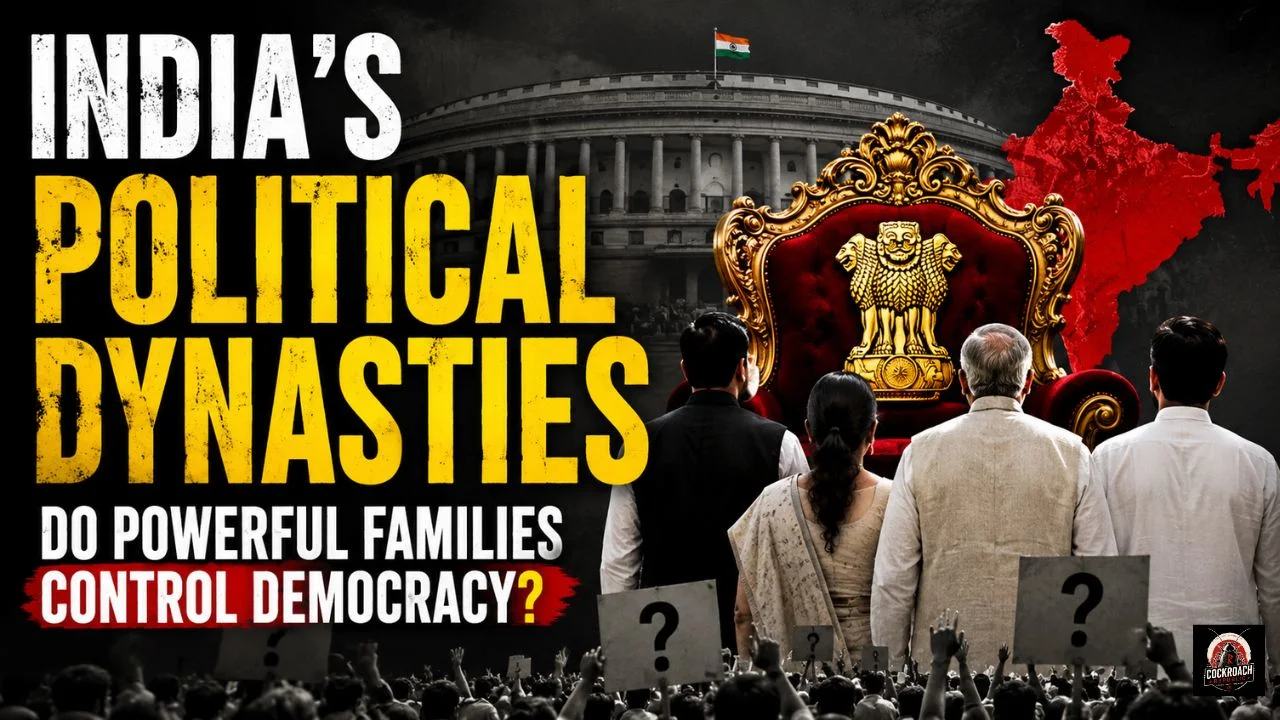
Indian elections often look less like a contest of ideologies and more like a battle of surnames. For decades, the narrative of a democracy “secretly controlled” by powerful bloodlines has dominated public discourse, breeding both voter cynicism and political propaganda. But what happens when we strip away the rhetoric and investigate the hard data?
For the ordinary Indian citizen, this is not merely an academic debate. When political power functions as a family heirloom, it dictates who makes the laws, how public resources are distributed, and whether a meritocratic outsider can ever truly rise to lead the nation.
An objective analysis of India’s political landscape reveals a truth that is far more complex than the conspiracy theories suggest. Dynasty politics in India is not a shadowy cabal; it is an open, heavily documented structural reality—one that simultaneously hinders and surprisingly helps the democratic process.
The Statistical Reality of the ‘Family Raj’
To understand the scale of the issue, we must look at the numbers. The narrative that political families own the entirety of Indian politics is statistically false, yet their influence is undeniably disproportionate.
According to a 2025 investigative report by the Association for Democratic Reforms (ADR), 21% of all Indian legislators (1,107 out of 5,204 MPs, MLAs, and MLCs) come from a political family. This means four out of five Indian lawmakers are not dynasts. However, the concentration of power rises at higher levels of governance:
- Lok Sabha: 31% of MPs possess a dynastic background.
- Rajya Sabha: 21% of members are dynasts.
- State Assemblies: 20% of MLAs come from political families.
Crucially, this phenomenon crosses all ideological and geographical boundaries. While cadre-based parties like the Bharatiya Janata Party (BJP) showcase a lower dynastic rate of roughly 17%, the Indian National Congress (INC) hovers around 32-33%. The numbers surge dramatically within regional forces—parties like the NCP (Shiv Sena factions) and YSRCP feature dynastic representation at staggering rates of 42% and 38%, respectively.
Across India, approximately 149 families currently hold multiple legislative seats, proving that the “family raj” is a systemic feature of the republic, not the monopoly of a single party.
The Usual Suspects: Bloodlines Across the Spectrum
Political dynasties are deeply embedded in both national and regional landscapes. Journalists and political analysts can map the country through these influential bloodlines without hesitation.
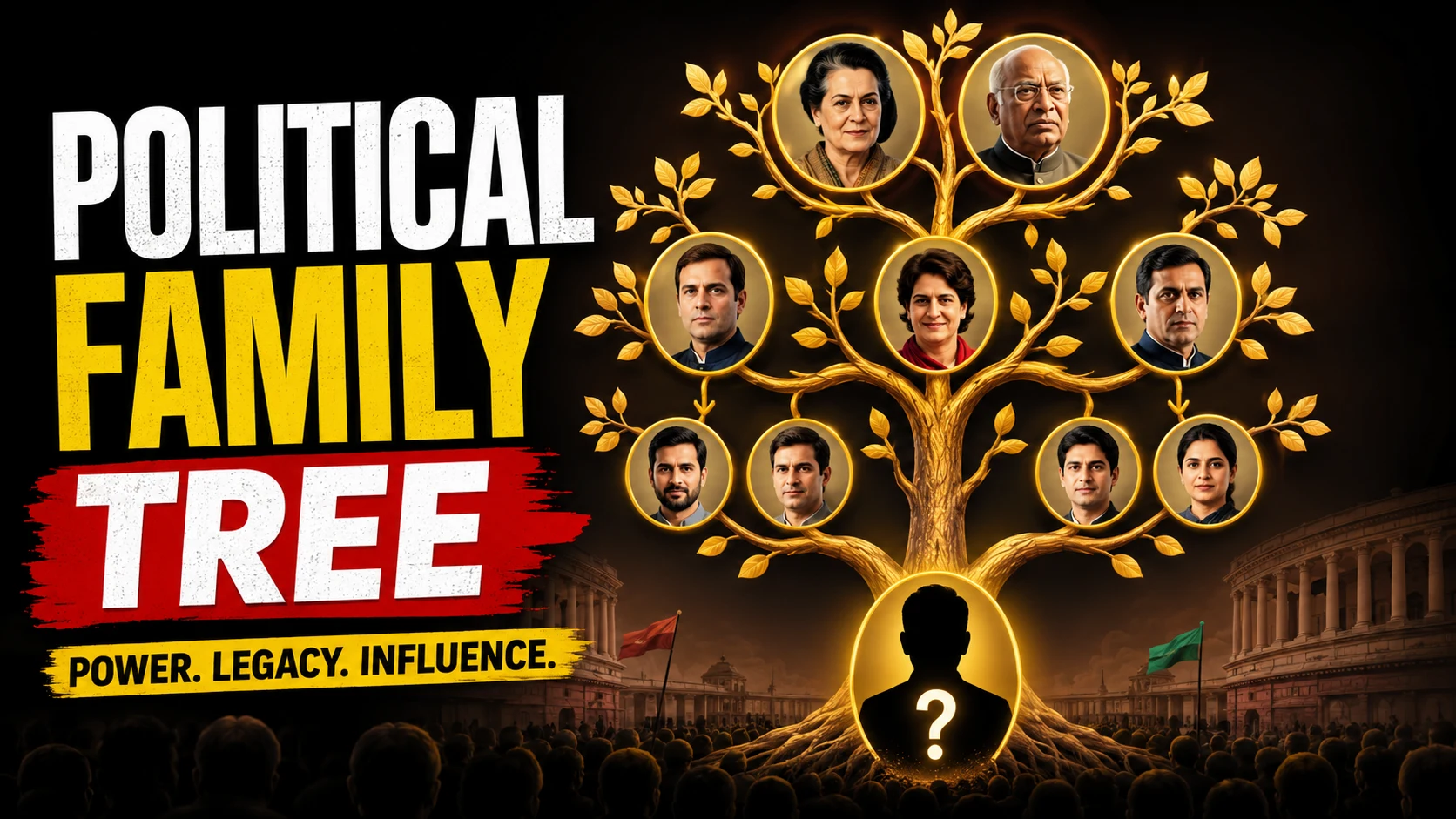
At the national level, the Nehru-Gandhi family has historically anchored the Congress party. In Uttar Pradesh, the Yadav family (tracing from Mulayam Singh Yadav) dominates the Samajwadi Party. Maharashtra’s political theater is heavily influenced by the Thackeray clan. In Tamil Nadu, the Karunanidhi lineage continues its governance through current Chief Minister M.K. Stalin. The Badal family has long held sway in Punjab, while the Abdullahs have shaped the geopolitics of Jammu & Kashmir. Meanwhile, royal-turned-democratic lineages like the Scindias have successfully navigated between the Congress and the BJP, maintaining their grip on regional power regardless of who rules the center.
ALSO READ The Financial Literacy Gap: Why Indian Schools Fail to Teach Money Management
The Structural Drivers: Why Families Win
Why do parties continually award tickets to the sons, daughters, and spouses of established leaders? The answer lies in the harsh, pragmatic mechanics of Indian elections:
- The Premium on ‘Winnability’: Elections in India are fiercely competitive and prohibitively expensive. An established surname offers instant brand recognition, drastically reducing campaign costs.
- Inherited Vote Banks: Dynasts inherit ready-made political networks, caste-based alliances, and loyal voter bases that take outsiders decades to build.
- Resource Monopoly: Political families control party funds, media narratives, and local infrastructure.
- Organizational Weakness: Most Indian political parties lack robust internal democracy. Without transparent ticket-allocation processes, party elites distribute power to those they trust most—their relatives.
ALSO READ Cockroach Janta Party: How a Courtroom Remark Ignited a 22-Million-Strong Youth Rebellion
The Dynasty Paradox: A Double-Edged Sword
Political scientist Kanchan Chandra, in her seminal work Democratic Dynasties, uncovered a fascinating paradox: dynasties actively harm democratic principles, yet they also serve as unexpected catalysts for marginalized representation.
The Harms:
Dynasties severely violate the principle of political equality. They create insurmountable entry barriers for grassroots workers, eroding meritocracy. Furthermore, data indicates that the logic of dynastic succession heavily favors upper castes, entrenching historical privileges. When a party’s internal structure relies on a “High Command” culture, it stifles dissent and increases the risk of corruption, as familial interests frequently override public welfare.
The Unexpected Benefits:
Counter-intuitively, dynastic politics acts as an informal quota system for the underrepresented. Indian politics is notoriously hostile to women, yet family networks provide a safe, funded pathway for female leaders. Astonishingly, 47% of female legislators in India have dynastic backgrounds, compared to just 18% of men. Similarly, dynasties have opened doors for minority leaders and younger politicians who would otherwise be shut out by the patriarchal, money-heavy realities of the electoral system.
A Global Phenomenon, Not a Feudal Hangover
A common myth is that India’s political dynasties are a hangover from its pre-colonial feudal past. In reality, former royals account for barely 3% of the Lok Sabha today. India’s dynasties are a modern product of democratic institutions themselves.
Furthermore, India is not an anomaly. While India’s dynastic representation sits between 23-31%, advanced democracies like Japan, Iceland, and Ireland see similar rates (25-33%). The persistence of political families is a global vulnerability of democratic systems where name recognition translates to ballot-box success.
ALSO READ Inside India’s Recruitment Scam Economy: How a Job-Hunger Crisis Fuels a Multi-Billion Rupee Network
The Way Forward
Indian democracy is not secretly hijacked by families; it is openly influenced by an electorate that often votes for familiarity and a party system that prioritizes guaranteed wins over ideological merit. Notably, the trend is showing signs of fatigue—continuous dynastic representation in the same constituency was only 5% between 2004 and 2014, proving that voters will eventually penalize non-performing heirs.
To dismantle the disproportionate power of political families, India does not need conspiracy theories; it needs institutional reform. The Election Commission must push for mandatory, transparent internal party elections. Campaign finance reform is urgently required to level the playing field for independent and grassroots candidates.
Until political parties are forced to democratize from within, the Indian voter will remain trapped in an illusion of choice, choosing between competing bloodlines rather than competing visions for the future. True democracy begins not just at the polling booth, but inside the very parties that claim to represent the people.