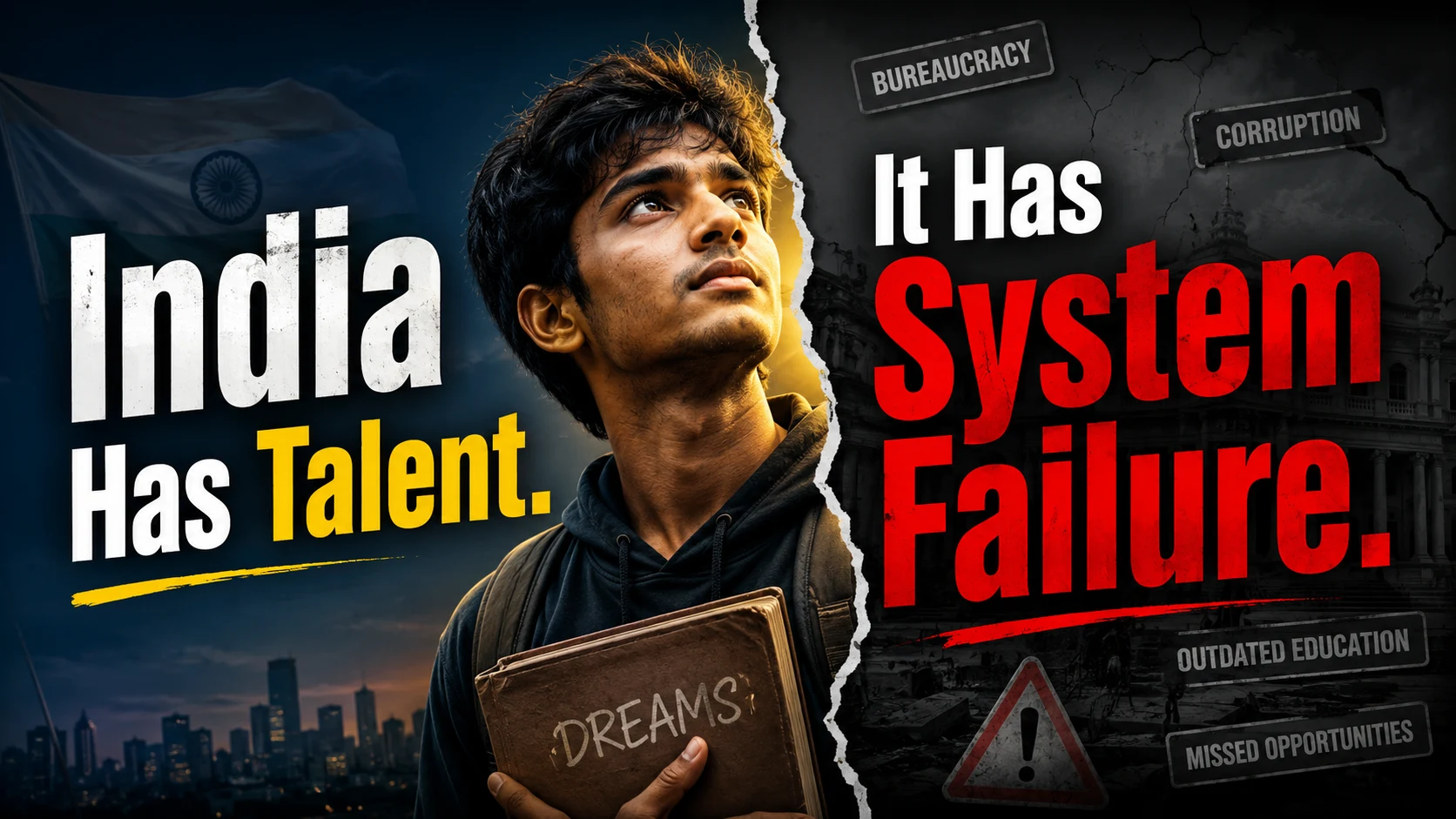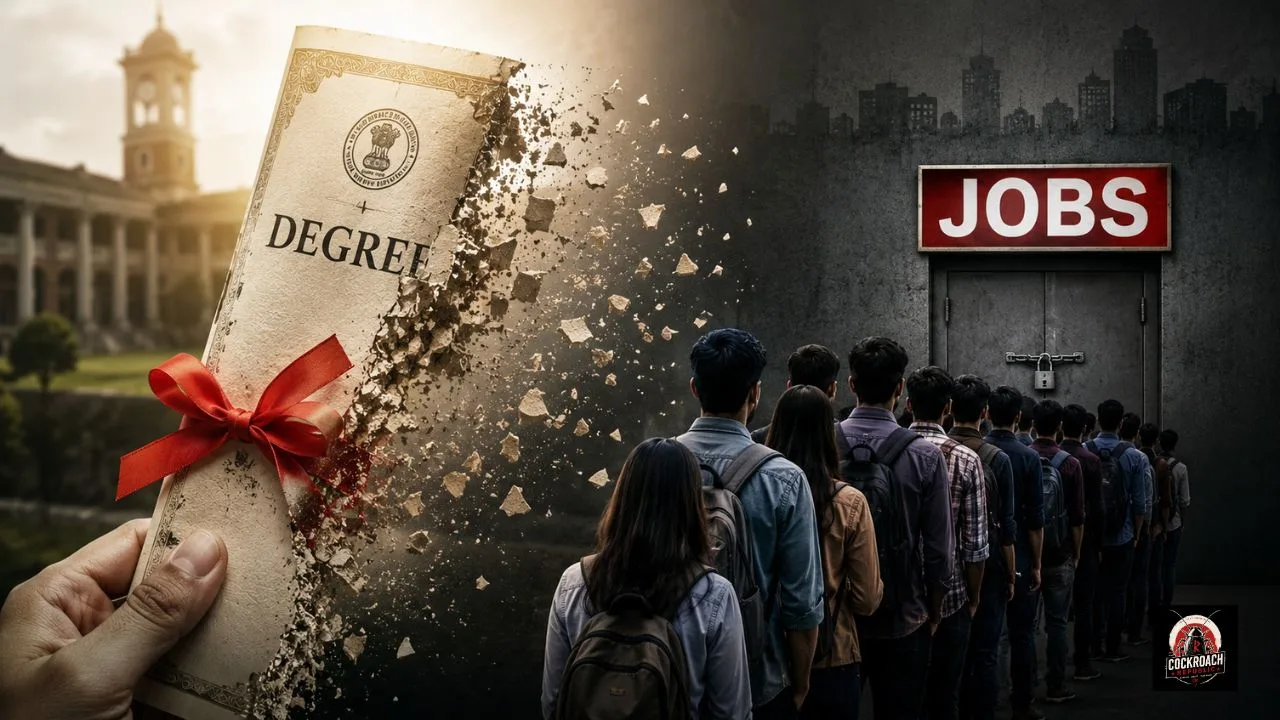
India has expanded its higher education system at a remarkable pace, but millions of young graduates are waking up to a harsh reality: a university degree no longer guarantees a job. For decades, a college certificate was viewed by Indian families as the ultimate passport out of poverty and into the secure middle class. Today, however, families are pouring their life savings into education only to find their children trapped in a cycle of underemployment, competing for jobs that barely require a high school diploma.
This is not a sudden crisis, but a slow-burning structural failure. The Indian job market is fundamentally shifting, and the traditional university system is struggling to keep up. As the gap between what colleges teach and what employers need widens, the core value of the Indian degree is being called into question.
The Employability Crisis by the Numbers
To understand the scale of the issue, one must look at the data. Access to higher education has undoubtedly improved. The Gross Enrolment Ratio (GER) in higher education climbed to 28.4% in 2021-22, up from 23.7% in 2014-15. India is producing more graduates than ever before in its history.
However, quantity has not translated to quality. Recent employability data paints a concerning picture:
- A major 2025 study found that only 42.6% of Indian graduates who actively apply for jobs possess the skills required to be overall employable.
- Another national skills report placed graduate employability slightly higher at 54.81%, which still means nearly half of all degree holders are not job-ready by industry standards.
- Meanwhile, corporate hiring is transforming. A recent industry report indicates that 80% of employers now follow a “skills-first” strategy, prioritizing practical ability over the name of the degree on a candidate’s resume.
Institutional Failures: Why the System is Stalling
The devaluation of Indian degrees is not the fault of a single government or institution, but rather a complex mix of educational bureaucracy, unchecked expansion, and economic realities.
ALSO READ Indian Brain Drain: India Creates Top Engineers. So Why Do They Leave?
1. Degree Inflation and the Quality Gap
When millions of students graduate with identical BA, BCom, BSc, or BTech degrees every year, the credential loses its power to distinguish candidates. To absorb the massive youth population, thousands of private colleges have sprouted across the country. While some maintain rigorous standards, many operate with outdated syllabi, underqualified faculty, and poorly equipped labs. In these institutions, passing exams relies on rote memorization rather than critical thinking, turning the degree into a mere paper qualification rather than a reliable signal of competence.
2. The Severe Skill Mismatch
A recurring theme across industry reports is that Indian graduates often possess theoretical knowledge but lack workplace readiness. The modern economy demands digital fluency, adaptability, complex problem-solving, and strong communication skills. Unfortunately, university curriculums often remain static, teaching what is in the decades-old syllabus rather than what is needed in the contemporary workplace.
3. Slow High-Quality Job Creation
The crisis is not solely an education problem; it is also a macroeconomic one. India’s economy is growing, but it is not generating enough high-quality, formal, entry-level jobs to absorb the tidal wave of graduates entering the workforce annually. When job creation in manufacturing, IT, and formal services lags behind graduate supply, intense competition ensues. This leads to massive underemployment, where individuals with engineering or master’s degrees are found applying for clerical roles or gig work just to survive.
ALSO REAd India’s Great Exam Crisis: How 65 Paper Leaks in 5 Years Are Breaking a Nation’s Meritocracy
The Shift Toward Skills-First Hiring
Corporate India is responding to this disconnect by changing how it recruits. In sectors ranging from artificial intelligence and data analytics to journalism and digital marketing, employers are bypassing the degree filter.
Instead of asking, “Where did you study?” recruiters are increasingly asking, “What can you do?” Portfolios, internships, freelance projects, and proven proficiency with industry tools now carry more weight than a first-class mark sheet from an average university.
A Nuanced Reality: Are Degrees Truly “Worthless”?
It would be journalistically inaccurate and sensationalist to declare that all Indian degrees are completely useless. The reality is more nuanced.
Degrees from elite institutions—such as the IITs, IIMs, AIIMS, and top-tier central universities—continue to carry immense premium and global market value. Furthermore, a recognized degree remains a non-negotiable legal requirement for government jobs, regulated professions (like law, medicine, and chartered accountancy), and pursuing postgraduate studies abroad.
The most accurate assessment is not that the degree is dead, but that it is no longer sufficient on its own. It has devolved from a finish line into a mere baseline.
Outlook and Necessary Reforms
If India is to harness its demographic dividend rather than face a demographic disaster, urgent systemic reforms are required.
- Industry-Academia Integration: Curriculums must be continuously updated in real-time collaboration with corporate sectors.
- Mandatory Apprenticeships: Practical internships and apprenticeships should be woven into the fabric of every undergraduate program, not just technical ones.
- Vocational Dignity: The cultural obsession with academic degrees must shift toward respecting and formalizing vocational training and specialized skill certifications.
For decades, India promised its youth that a degree was the key to unlocking a prosperous future. Today, the locks have changed. Until the education system focuses on building capable minds rather than just printing certificates, millions will continue to graduate into a market that has no place for them. True empowerment will only come when what is taught in the classroom finally matches the reality of the world outside it.