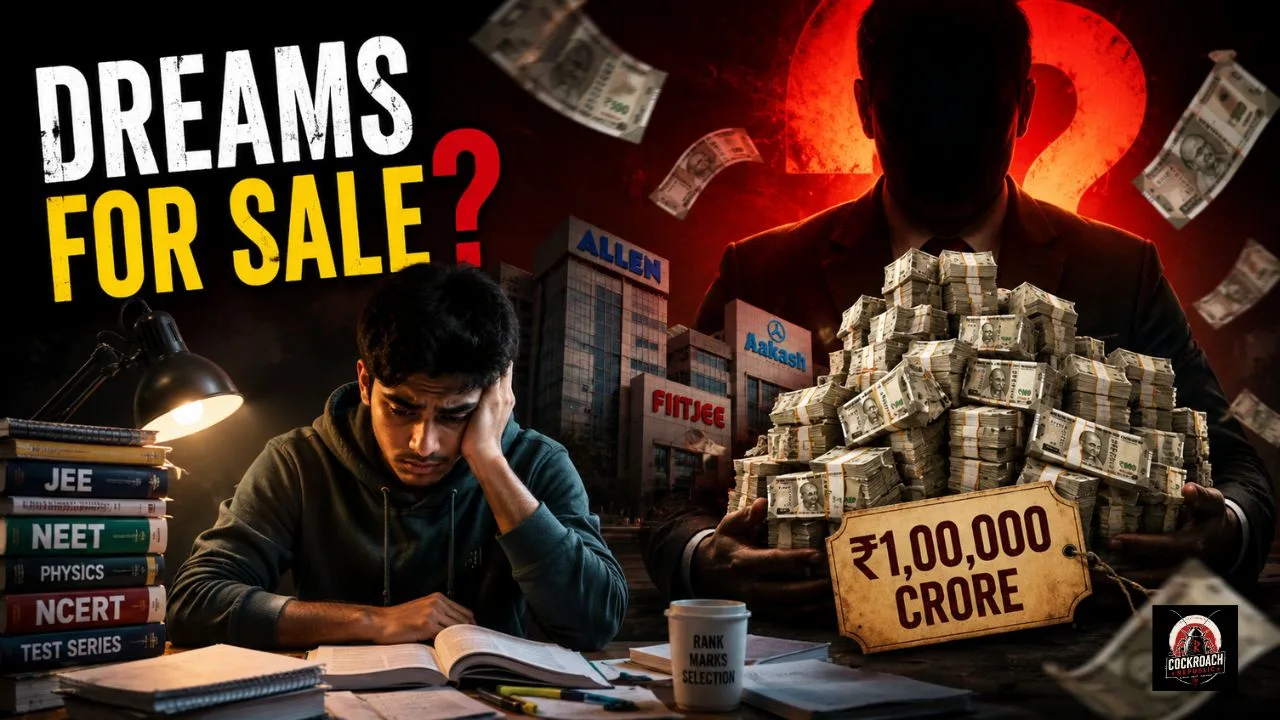
Every year, millions of Indian teenagers pack their bags for cities like Kota, carrying not just textbooks, but the heavy, fragile hopes of their entire families. What awaits them is not a traditional education, but an industrial-scale exam factory that strictly dictates their present and heavily gambles their future. At the heart of this migration is a ₹1 lakh crore (~$12 billion) private coaching industry that has quietly replaced the foundational schooling system, dictating the aspirations of a quarter of India’s student population.
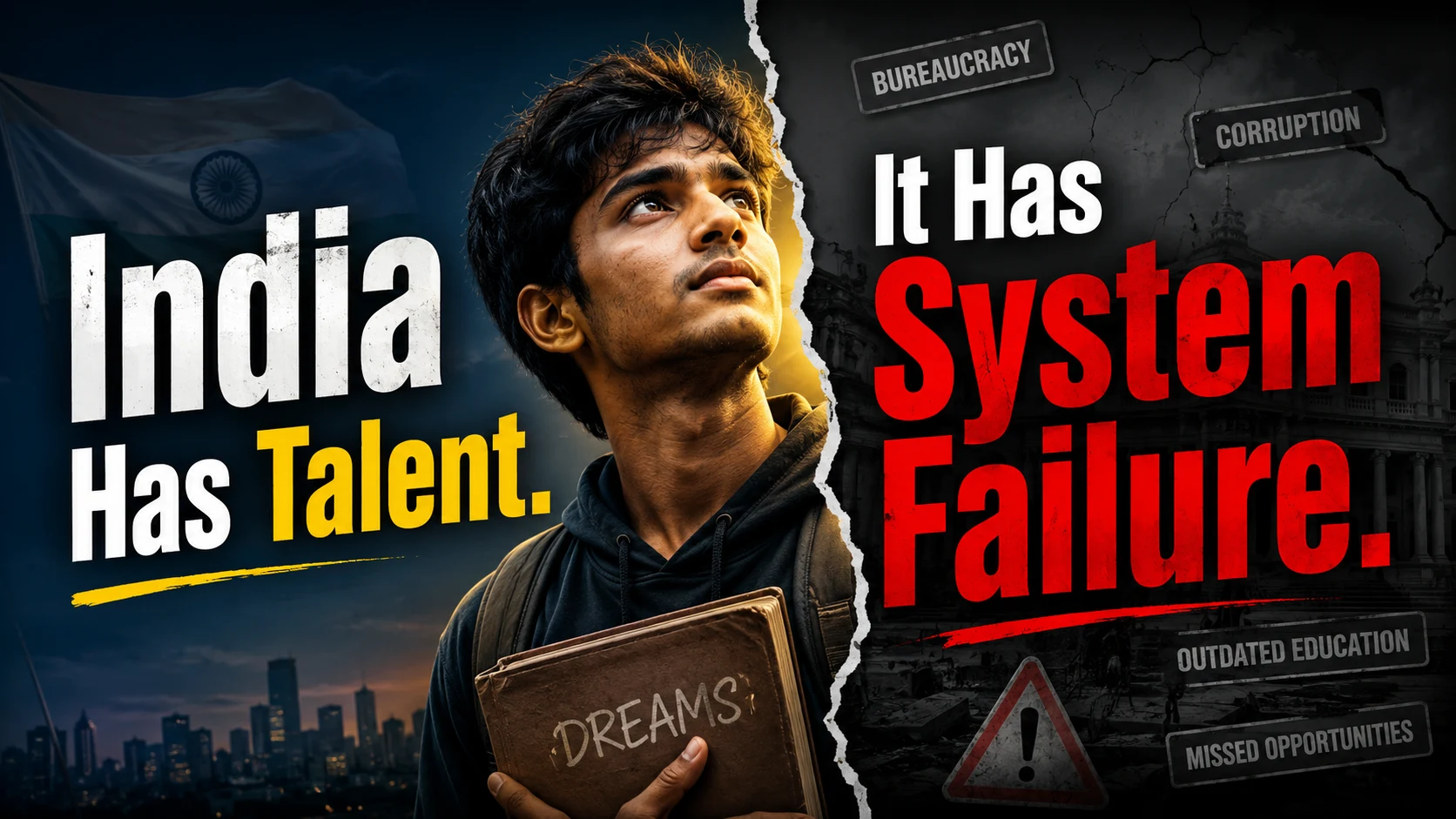
This parallel ecosystem has grown so powerful that critics and frustrated parents routinely describe it as a “mafia.” But a closer investigation reveals a more complex truth: the coaching industry is not the root of the problem, but a highly profitable symptom of profound institutional failures.
The Shadow Education System- India’s Coaching Industry
Private coaching in India is no longer supplemental; it is the primary mode of education for millions. According to 2025 data from the Centre for Media Studies (CMS), 27% of all Indian school students are enrolled in private coaching, with higher concentrations in urban (30.7%) than rural (25.5%) areas.
In Kota, the undisputed capital of this industry, the student population has swelled from 120,000 in 2015 to 156,000 today, driving a local economy valued at over $500 million. To facilitate this, a system of “dummy schools” has flourished. Students are officially enrolled in regular schools to meet board requirements but never attend classes, spending their entire day at coaching centers instead.
Why Schools Failed: The Root Cause
The mass exodus to coaching centers highlights a severe trust deficit in India’s formal schooling system. Chronic teacher absenteeism, crumbling infrastructure, and outdated pedagogy in government schools have forced parents to seek alternatives.
The Annual Status of Education Report (ASER) 2023 painted a grim picture: while 73% of Class V students can read a basic text, fewer than 50% can solve simple division problems. When schools fail to deliver basic comprehension, parents are driven toward private tuitions to bridge the gap.
Furthermore, India’s higher education bottleneck creates a hyper-competitive, high-stakes environment. For the Joint Entrance Examination (JEE), roughly 1 million students compete for just 10,000 seats in 23 IITs—a 1% success rate. For medical aspirants taking NEET, 2 million students fight for 140,000 seats. In a system defined by elimination rather than selection, coaching institutes sell the ultimate commodity: a statistical edge.
ALSO READ The Great Indian Education Paradox: Why Millions of Hard-Working Students Remain Unemployed
The Business Model: Factories of Rote Learning
Unregulated for decades, the coaching industry has developed aggressive, purely commercial operational tactics. Until recent interventions, institutes lured desperate families with misleading advertisements guaranteeing top ranks.
Inside the classrooms, the environment is intensely stratified. Students are subjected to “batch segregation”—divided not alphabetically, but by their mock-test ranks. This creates a psychological hierarchy that regularly humiliates lower-performing teenagers. Schedules often stretch to 18 hours a day, entirely oriented around fortnightly exams that define a student’s self-worth.
The financial model is equally unforgiving. Fees are typically extracted upfront for two-year programs, forcing lower-middle-class families into debt. As author Graham Hancock observed regarding entrenched systems, critics note that wealthy coaching owners actively lobby against educational reforms because “it will destroy their business.”
The Human Toll: A Crisis of Mental Health
The pressure-cooker environment has led to a documented public health crisis. Most victims are teenagers from remote, lower-income families who succumb to the pressure within six months of arriving in Kota.
- 2022: 15 suicides
- 2023: 26 suicides (an all-time high)
- 2024: 17 suicides (a 38% dip following state interventions)
- 2025 (as of May): 14 suicides
Source: Hindustan Times, 2025
The psychological cycle is brutal. Fortnightly result days trigger immense shame, leading to depression and, tragically, self-harm. The suicide note of 18-year-old Niharika encapsulated this despair: “I can’t do JEE. I’m a loser.”
As The Diplomat noted, this continuing tragedy “underscores the abysmal failure of India’s higher education system where political stakeholders perceive students as pawns for commercial benefit.”
ALSO READ Inside India’s Billion-Rupee Exam Mafia: How Paper Leaks Became a National Crisis
The Employment Paradox: Degrees Without Jobs
Perhaps the greatest tragedy of the coaching ecosystem is that it frequently fails to deliver the upward economic mobility it promises. India produces millions of engineers and doctors trained to crack exams, but industry data reveals a massive skills gap.
| Metric | 2025 Reality |
| Youth Unemployment (15–29) | >20% (Double national average) |
| Graduate Employability | 54.81% (India Skills Report) |
| Graduates in Matching Jobs | 8.25% (Economic Survey 2024-25) |
Nearly one in two graduates is not job-ready. Over 50% of those who do find work are underemployed in low-skill or semi-skilled jobs. As noted by PMF IAS, “Coaching culture prioritises exam ‘gaming’ over conceptual understanding, promoting rote learning and undermining holistic education.”
Regulatory Paralysis
Despite the human and economic costs, the government’s response has been slow. In January 2024, the Ministry of Education issued guidelines banning the enrollment of students under 16 and mandating the presence of trained counselors.
However, because education is on the concurrent list of the Indian Constitution, these guidelines remain toothless unless states enact them into law. Currently, only a handful of states—including Rajasthan, Bihar, and Goa—have established legal frameworks. Furthermore, the National Education Policy (NEP) 2020 recommended spending 6% of GDP on education; actual expenditure hovers around 3%.
By failing to adequately fund public schools, the state implicitly relies on the private coaching sector to absorb the aspirations—and frustrations—of the youth.
The Way Forward
Dismantling the “coaching mafia” requires structural alternatives, not just punitive bans. A sustainable reform path must include:
- Exam Reform: Implementing the NEP 2020’s vision of Continuous and Comprehensive Evaluation (CCE) to move away from high-stakes, rote-memory testing.
- Fee Regulation: Mandating quarterly fee structures to prevent the exploitative practice of locking families into non-refundable, multi-year contracts.
- Public Alternatives: Scaling free, high-quality digital learning platforms like DIKSHA and SWAYAM to democratize access to top-tier instruction.
- Skills Over Degrees: Aligning high school curriculums with industry-relevant skills, portfolios, and internships rather than purely theoretical knowledge.
India’s youth demographic is its greatest economic asset. But until the focus shifts from gaming entrance exams to genuinely building minds, the nation risks turning its demographic dividend into a generation of burnt-out, underemployed graduates. The coaching industry may hold the reins today, but the true failure lies in a system that handed them over in the first place.